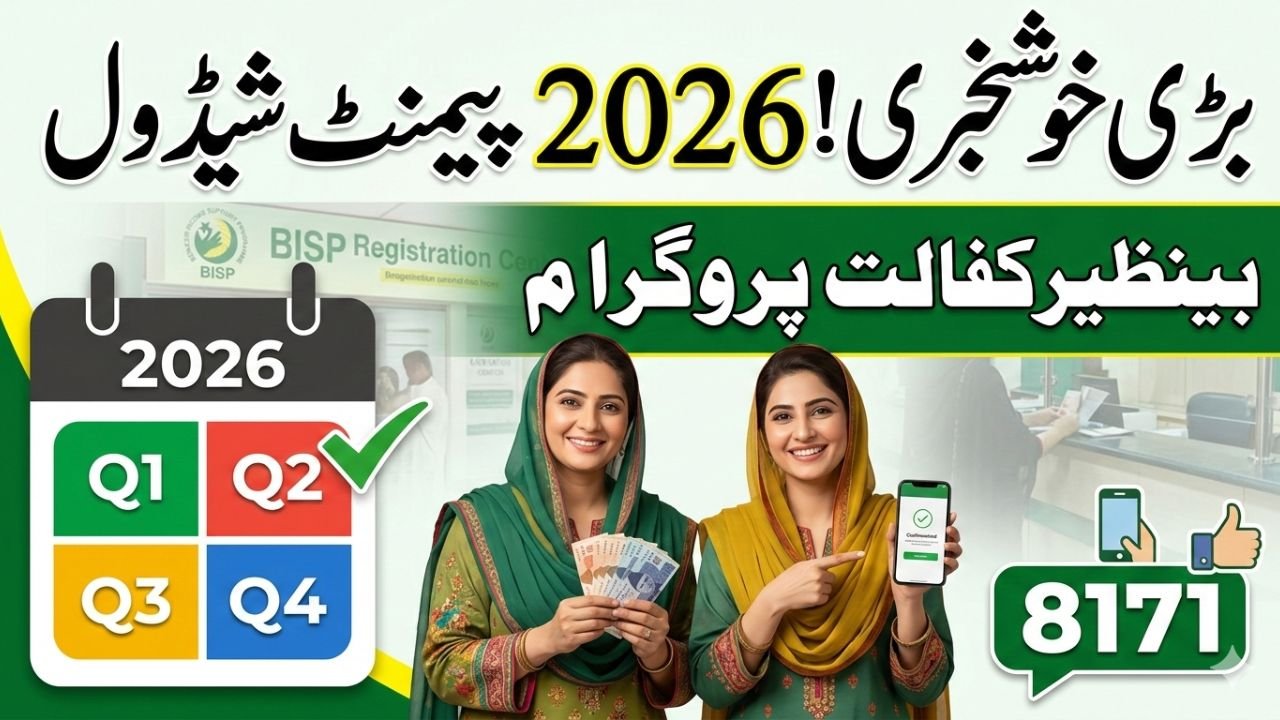
The Benazir Income Support Programme (BISP) remains Pakistan’s largest social safety net, providing essential financial stability to millions of deserving families. As we move into 2026, the Government of Pakistan has streamlined the disbursement process to ensure transparency and ease of access for beneficiaries. This article provides the most up-to-date information regarding the Benazir Kafaalat Payment Schedule 2026, eligibility criteria, and the new digital registration process.
Also Read: Mera Ghar Mera Ashiana
Quarterly Disbursement Cycles for 2026
For the year 2026, the government has scheduled the Kafaalat payments in four distinct quarterly phases. These payments are often accompanied by additional relief packages, such as the Ramzan Relief Bonus, which is specifically designed to support low-income households during the holy month. The current installment for the first quarter of 2026 is currently being disbursed across the country through designated partner banks.
To maintain order and avoid overcrowding at centers, the government often releases payments in a staggered manner based on districts. Beneficiaries are encouraged to wait for the official SMS from 8171 before visiting their nearest payment campsite or biometric retail shop.
Benazir Kafaalat 2026 Payment Overview
| Installment Period | Expected Release Month | Estimated Amount (PKR) |
| 1st Quarter (Jan – Mar) | Late February / March | Rs. 10,500 + Ramzan Bonus |
| 2nd Quarter (Apr – Jun) | May / June | Rs. 10,500 |
| 3rd Quarter (Jul – Sep) | August / September | Rs. 10,500 |
| 4th Quarter (Oct – Dec) | November / December | Rs. 10,500 |
Eligibility and The NSER Survey 2026
The eligibility for the Benazir Kafaalat program is determined through the National Socio-Economic Registry (NSER) survey. In 2026, the government has prioritized a “Dynamic Registry” system. This means that if your household’s financial situation has changed, you can visit a BISP Tehsil Office to update your data.
To be eligible, a family must have a Poverty Score (PMT) below the threshold set by the government. Special preference is given to widows, persons with disabilities, and households with no stable source of income.
How to Register for Benazir Kafaalat
If you are not yet registered, the process is now more accessible than ever. You do not need to pay any agent or third party for registration. Simply follow these official steps:
- Visit a BISP Tehsil Office: Bring your original CNIC and the B-Forms of your children.
- Complete the Dynamic Survey: Provide accurate details about your household assets and income.
- Wait for Verification: Your data will be processed, and you will receive an eligibility message from 8171.
For online status checks and to find your nearest registration center, please visit the official government portal:
Official Registration & Status Link: https://8171.bisp.gov.pk/
Frequently Asked Questions (FAQs)
Q1: How can I check my 2026 payment status?
You can check your status by sending your 13-digit CNIC number via SMS to 8171 or by entering it on the official BISP web portal.
Q2: What should I do if my thumbprint is not matching?
If biometric verification fails, visit the nearest BISP office. They will guide you through a specialized verification process or direct you to NADRA for a fingerprint update.
Q3: Is there a fee for receiving the Kafaalat payment?
No. The full amount belongs to the beneficiary. If any agent demands a “commission” or deduction, report it immediately to the BISP helpline at 0800-26477.
Conclusion
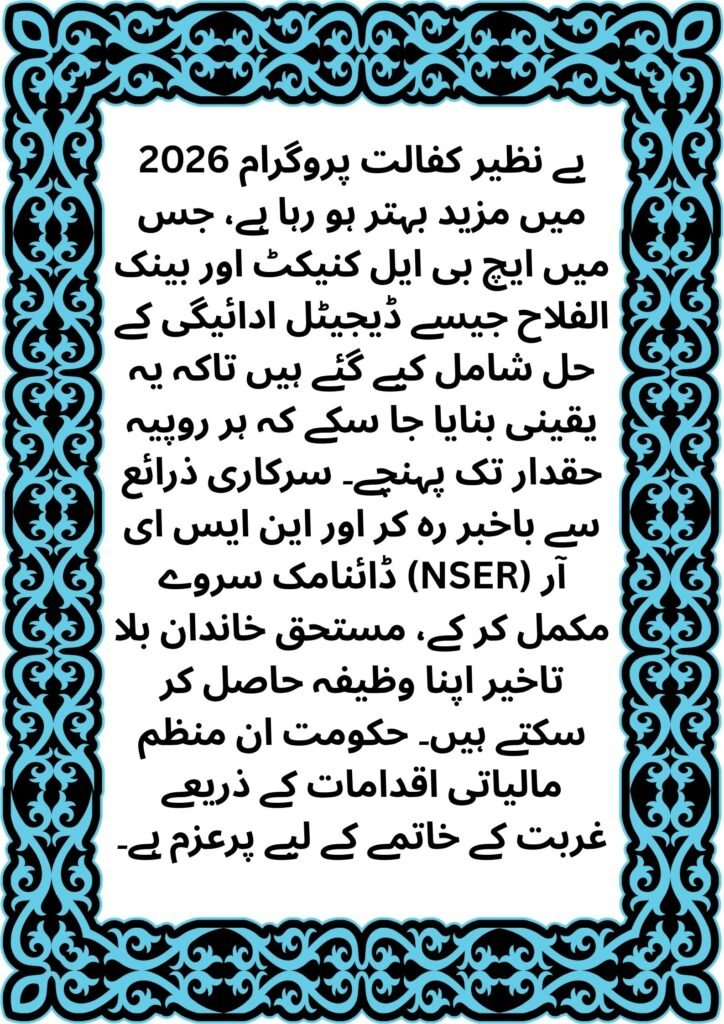
The Benazir Kafaalat program continues to evolve in 2026, integrating better digital payment solutions like HBL Konnect and Bank Alfalah to ensure that every rupee reaches the rightful recipient. By staying informed through official channels and completing the NSER dynamic survey, eligible families can ensure they receive their stipends without delay. The government remains committed to poverty alleviation through these structured financial interventions.